
Spray Foam vs. Batt Insulation: Where Each One Belongs
Spray foam and fiberglass batts get compared as if one has to win. In practice they do different jobs, and most well-built homes in North Central Washington use both. This guide walks through how they differ on air sealing, how R-value actually behaves in a real assembly, how each material handles moisture, and which parts of a house each one suits.
The difference that matters most: air sealing
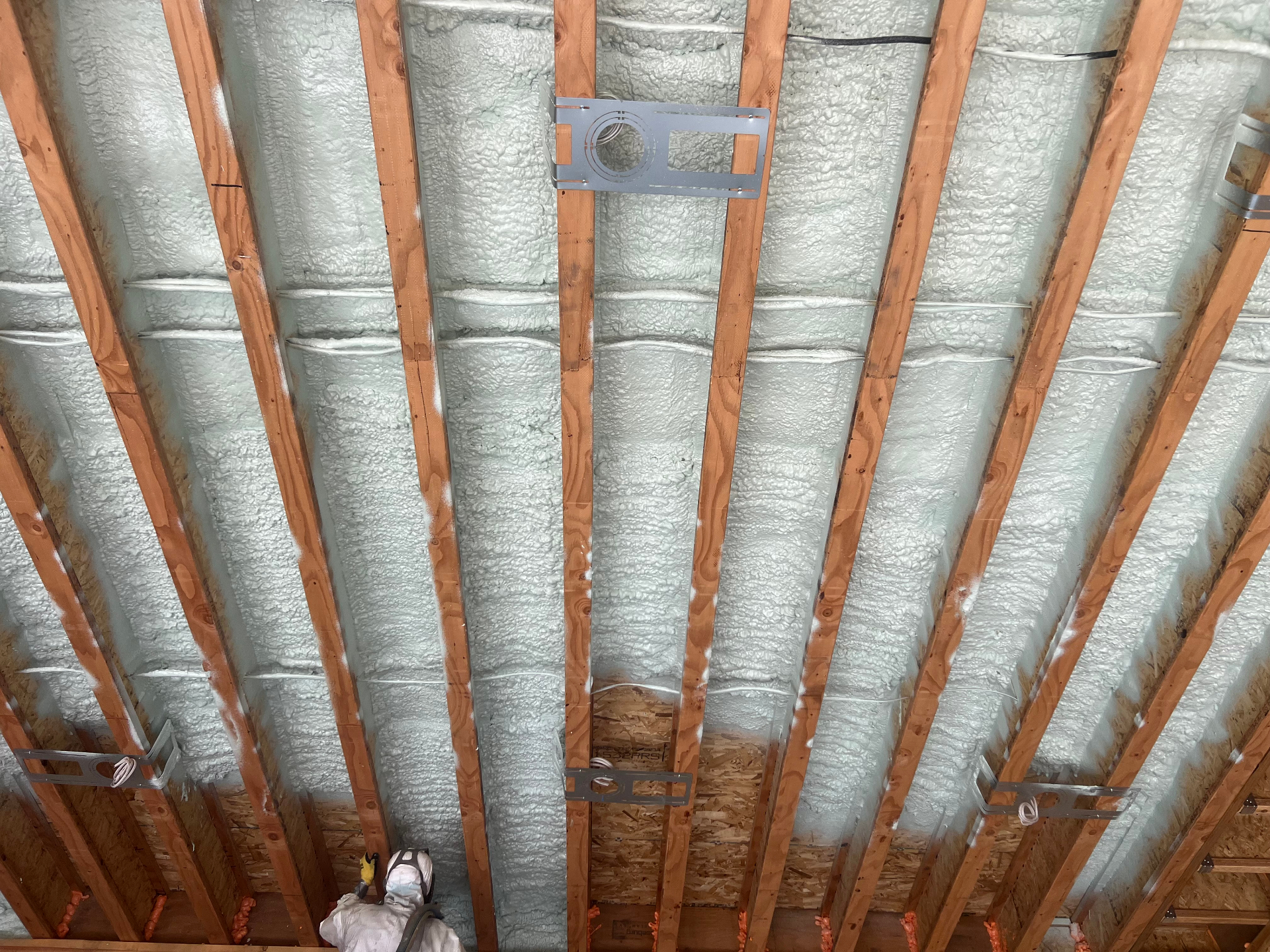
Fiberglass batt insulation slows heat transfer by trapping air in the fibers. It does not stop air from moving. Air can pass through a batt, around it at the edges, and through any gap between the batt and the framing. Spray foam is different because it expands in place, bonds to the framing and sheathing, and closes the seams as it cures. That means it insulates and air seals in a single application. This distinction explains most of the disagreement about the two materials. In a perfectly built cavity with a well-detailed separate air barrier, batts perform exactly as intended. In a cavity with wiring, plumbing, an electrical box, and a slightly out-of-square stud, batts get cut, compressed, and gapped, and the air moving through those gaps carries away much of the performance. Foam is more forgiving of that reality, which is why it dominates in irregular assemblies.
How R-value behaves in a real building
R-value is measured on a material under laboratory conditions with no air movement. A building is not a laboratory. Two assemblies with the same nominal R-value can behave very differently once air is moving through one of them, and that is before accounting for thermal bridging through the framing itself. Closed cell spray foam carries a higher R-value per inch than open cell foam or fiberglass, which matters when the cavity depth is limited, such as a cathedral ceiling or a two by four wall that has to hit a target. Open cell foam has a lower R-value per inch but fills and seals generously, which suits deeper cavities. Fiberglass batts deliver good R-value per dollar of installed depth when the cavity is open, regular, and accessible, which describes most attic floors and standard new construction stud bays. The right question is not which number is higher, it is which material will still be performing at its rated value after the wall is closed up.
Moisture, and why it decides some assemblies outright
In our climate, moisture problems are usually caused by warm indoor air carrying water vapor into a cold assembly, condensing there, and staying. Fiberglass does not stop that air movement, so a batt in a leaky cavity can end up damp, matted, and far less effective, and the framing behind it can stay wet. Closed cell spray foam resists both air and vapor movement, which is why it is the common choice at rim joists, crawl space perimeters, and cathedral ceilings where there is no room for a vented cavity. Open cell foam seals air but is vapor permeable, which can be an advantage or a problem depending on the assembly and which side of the wall it is on. This is exactly why we look at the assembly before recommending a material rather than defaulting to one. The wrong material in the wrong place does not just underperform, it can trap moisture where it causes damage.
Where each one belongs in a North Central Washington home
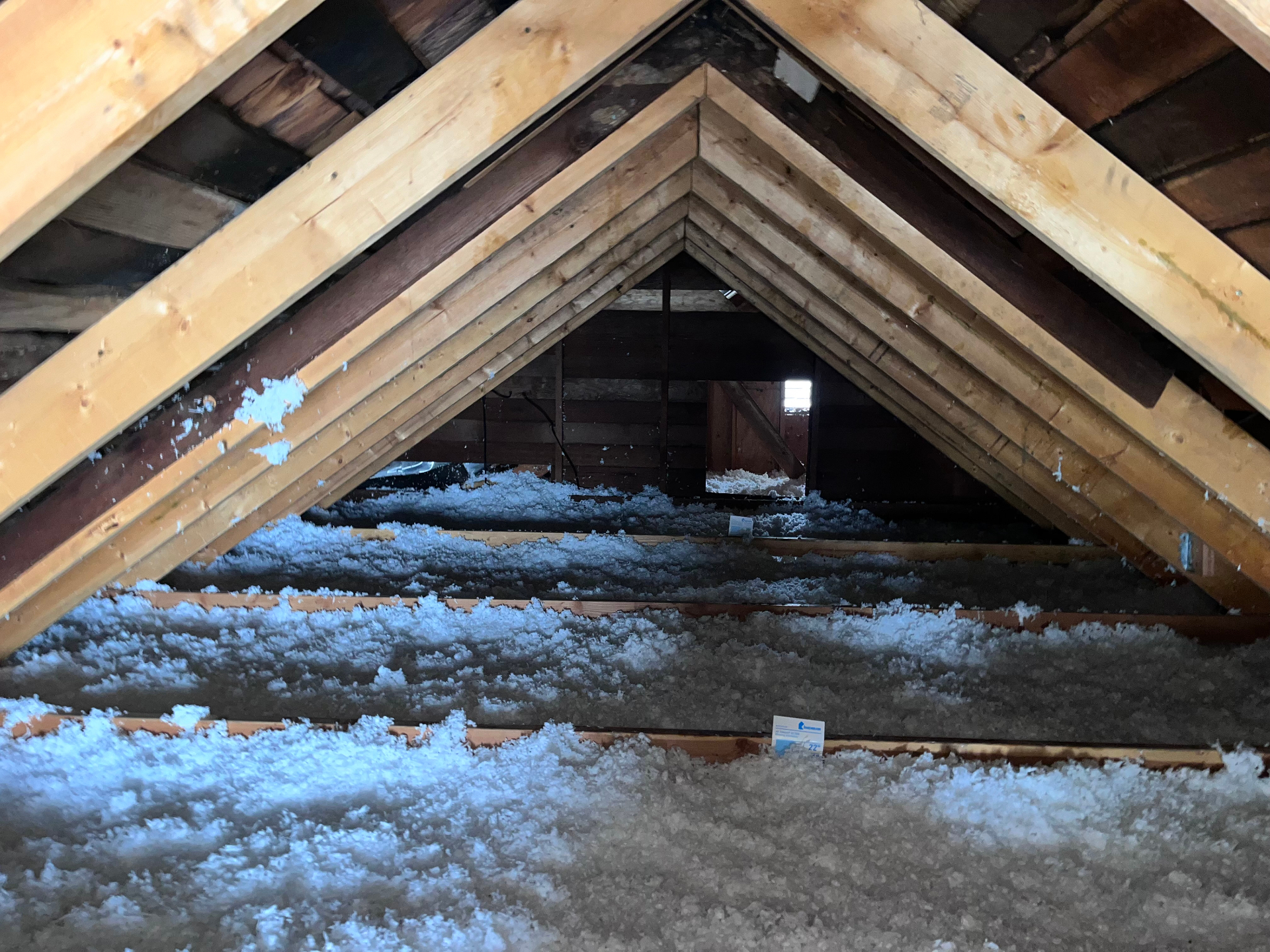
Attic floors with open access and room for depth are natural territory for blown-in or batt insulation, built to an even depth over a clean, air sealed deck. Standard new construction stud bays with regular framing are a straightforward batt application. Rim joists, band joists, cantilevers, knee walls, crawl space perimeters, cathedral ceilings, bonus rooms over garages, and shop or pole buildings with irregular or exposed framing are where spray foam earns its place. A typical project here combines them: foam at the rim joist and crawl space perimeter, blown-in over the attic floor, batts in the walls, and targeted sealing at the penetrations that leak the most. That combination usually outperforms an all-foam or all-batt approach, because each assembly gets what it actually needs.
Making the call on your own project
Before committing to a material, it is worth answering a few questions about the space: how deep is the cavity, how regular is the framing, is the assembly vented, where is the air barrier supposed to be, is there existing insulation that has to come out, and does the project need a documented air leakage result. Those answers narrow the choice quickly. On new construction the code path and the target leakage number also factor in. If you are unsure, that is a normal place to be, and it is what the estimate visit is for. We look at the assembly, explain which material suits it and why, and are happy to recommend batts where batts are the right answer.
Related service: Spray Foam Insulation
FAQ
Common questions
- Is spray foam always better than batt insulation?
- No. Spray foam is stronger where air sealing and irregular framing are the challenge, such as rim joists, crawl space walls, and cathedral ceilings. Batts and blown-in insulation perform well in open attics and regular stud bays, and most projects use a combination.
- Can I put batts over spray foam, or mix the two in one house?
- Mixing materials across a house is normal and often the best result. Combining them within a single assembly is possible but depends on the assembly and where the air and vapor control layers need to be, so it is worth reviewing before the work starts.
- Which material is better for a crawl space in this area?
- Crawl spaces in our climate are usually a moisture question first. Closed cell spray foam at the perimeter, combined with a properly installed ground vapor barrier, is a common approach, but we inspect for standing water and drainage problems before recommending anything.
Need garage door or insulation work done right?
Call 509-433-4065 or request an estimate online. Serving Wenatchee, East Wenatchee, Malaga, and the surrounding North Central Washington area.