
Choosing a Garage Door: A Practical Guide
A garage door is the largest moving part of a house and usually the largest single opening in the building envelope. Choosing one involves more than picking a panel style from a brochure. This guide covers the common styles and materials, how insulation values apply differently to heated and unheated garages, the modern glass and two-tone options people are asking about, and what a replacement actually involves from measurement through operation.
Styles and how they fit the building
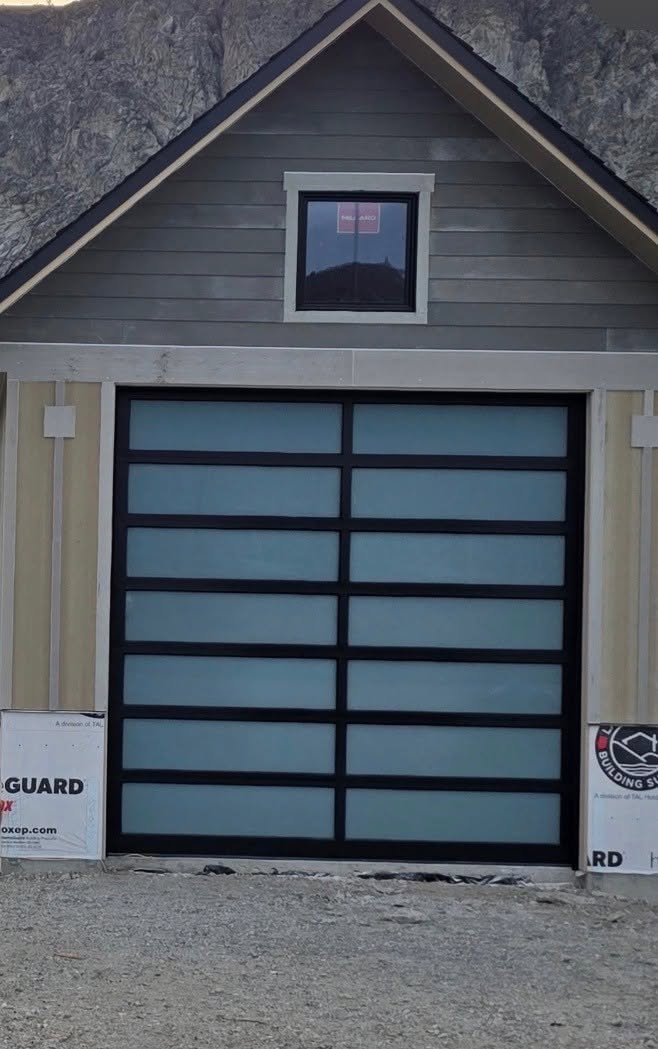
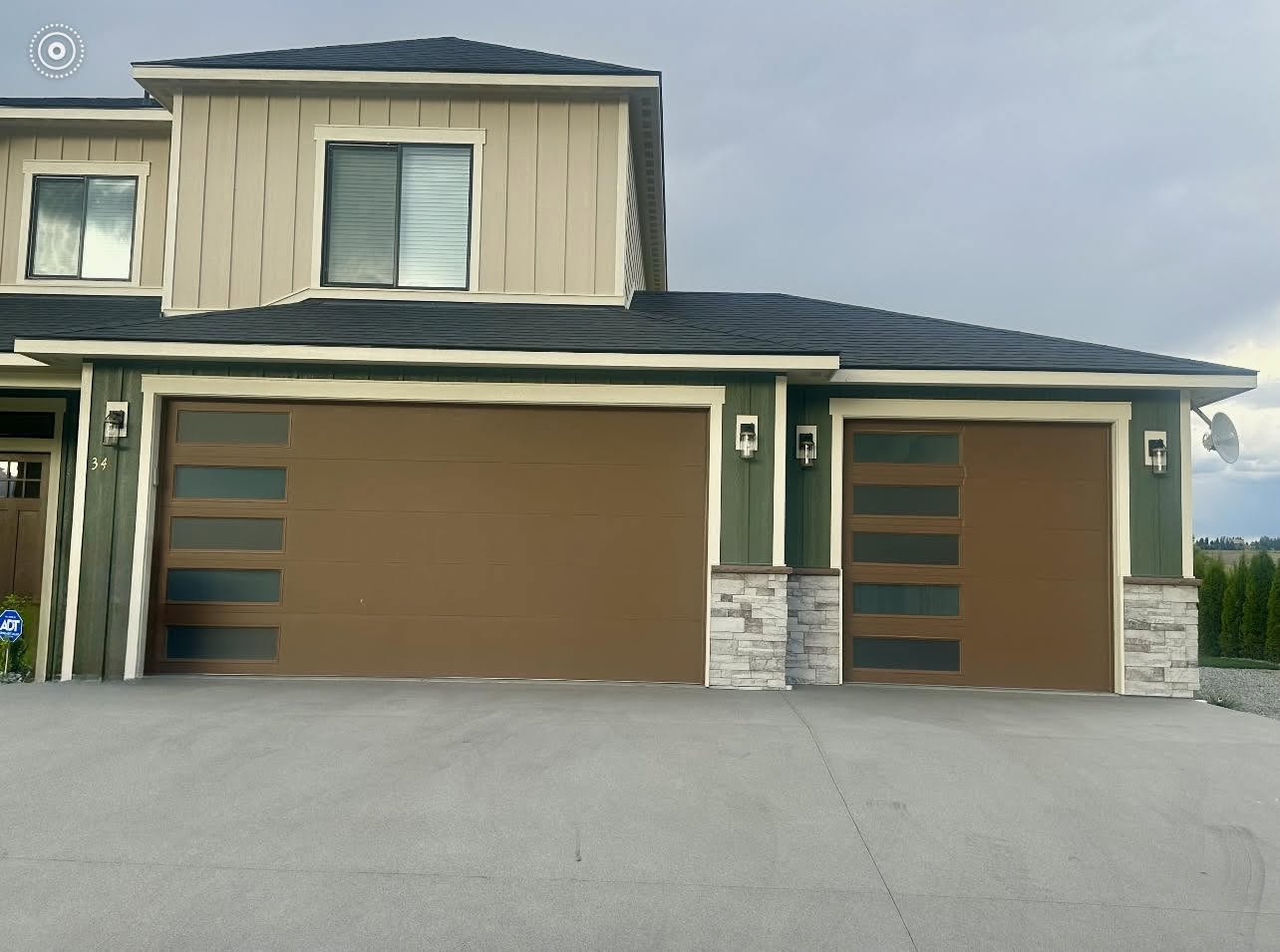
Nearly all residential doors today are sectional: horizontal panels hinged together that roll up along a track. Within that, the differences are in the panel profile and the finish. Traditional raised panel doors suit older and conventional homes and are the most familiar look in most neighborhoods. Flush and recessed panel doors read cleaner and pair well with contemporary and craftsman homes. Carriage house styles mimic swing-out barn doors while operating as a normal sectional. Full-view glass and aluminum doors are the modern statement option. The right choice is partly aesthetic and partly practical: a door has to suit the architecture, the exposure, and how the space actually gets used. A detached shop with a high ceiling has different track and headroom requirements than an attached two-car garage, and a large opening on a wind-exposed elevation may call for different construction than a sheltered one.
Materials and what they trade off
Steel is the most common material and for good reason: it is durable, dimensionally stable, low maintenance, available in a wide range of finishes, and readily available insulated. Most residential replacements in this valley are insulated steel sectional doors. Aluminum with glass panels delivers the modern look and lets natural light into the garage, and it is common on contemporary homes and shops that double as usable space. Wood and wood composite offer warmth and a custom appearance but ask for more upkeep, which is a real consideration in a climate with intense summer sun and cold winters. Fiberglass and composite facings sit between those, offering wood appearance with less maintenance. Beyond the facing material, construction matters: single layer doors are a steel skin only, two layer doors add insulation, and three layer doors sandwich insulation between two steel skins, which adds rigidity and reduces noise as well as heat transfer.
Insulation: heated garages, attached garages, and cold storage
Garage door insulation is rated with an R-value, and how much you need depends entirely on what the garage is for. If the garage is attached to the house, the door is part of a buffer zone: the garage is not conditioned, but the wall and ceiling between it and the living space are. An insulated door keeps that buffer closer to indoor temperature, which makes the rooms above and beside it noticeably more comfortable, and it reduces the summer heat load pushing into the house. If the garage or shop is actively heated as a workspace, the door is a large heat loss surface and insulation is the difference between a space that holds temperature and one that does not. If the building is unheated, detached storage, insulation matters less, though a door with a good perimeter seal still keeps out dust, wind-driven debris, and rodents. That perimeter seal is worth as much attention as the R-value. A highly insulated door with a gap under it and worn weather seal on the jambs is still an open hole in the envelope.
Modern glass, two-tone, and current options
Two things have changed what people are asking for. Full-view glass doors, with aluminum frames and clear, frosted, or tinted glazing, have moved from commercial buildings into custom homes and shops, because they make a garage feel like a usable room rather than a cave. They come in insulated glazing options, and the frame and glass choices affect both privacy and heat gain, which is worth thinking through on a west-facing elevation in a valley that gets serious afternoon sun. Two-tone doors, where the panel and the overlay or trim are finished in contrasting colors, are a straightforward way to tie the door into a home's exterior palette. Beyond appearance, hardware and operators have moved on as well: quieter belt drive operators, battery backup, and smartphone control are common requests, and they are worth deciding on before the order rather than after.
What a replacement involves
A replacement starts with measurement, not selection. The rough opening, headroom above the opening, side room on each side, and backroom depth all determine which track configuration is possible, and older homes in this area frequently have out-of-square jambs, undersized headers, or framing that was never built for a modern insulated door. Once the measurements confirm what will fit, the door, track, springs, and hardware are specified as a system, because spring sizing depends on door weight. On installation day the old door, panels, track, and hardware come out, the framing and jambs are checked, and the new system is installed square and level so the door seals against the floor and the stops. Spring tension and travel limits are adjusted, the balance is tested, and the perimeter seal and threshold are reviewed rather than treated as an afterthought. Before we leave, we walk through operation, safety reversal, and the basic maintenance that keeps a door running well for years.
Related service: Garage Door Installation & Replacement
FAQ
Common questions
- Do I need an insulated garage door?
- It depends on the garage. For an attached garage or a heated shop, an insulated door makes a clear difference in comfort and in how the adjacent rooms feel. For unheated detached storage, the perimeter seal usually matters more than the R-value.
- Can a modern glass door work on an older home?
- Sometimes, and it comes down to the architecture and the exposure. Glass doors bring light into a garage and look sharp on contemporary homes and shops, but glazing choice matters on a west-facing wall in this valley. We review the options against the building during the estimate.
- How long does a garage door replacement take?
- Most single-family replacements are completed in a day once the door has arrived, including removal of the old system, installation, spring and travel adjustment, and testing. The measuring and ordering happen ahead of that.
Need garage door or insulation work done right?
Call 509-433-4065 or request an estimate online. Serving Wenatchee, East Wenatchee, Malaga, and the surrounding North Central Washington area.