
Crawl Space Vapor Barriers: Why They Matter Here
A lot of homes in the Wenatchee valley sit over a vented crawl space with a bare dirt floor. That soil is releasing moisture upward every day of the year, and the framing, insulation, ductwork, and eventually the air inside the house are what absorb it. This guide explains why a ground vapor barrier matters in this climate, the signs that a crawl space is causing problems, what proper installation involves, and how it affects the rest of the building.
What is actually happening under the floor
Soil is never truly dry. Even in a hot, arid summer, ground under a house stays damp and continuously releases water vapor into the space above it. In a vented crawl space that vapor mixes with outside air and moves through the floor system. In winter, warm indoor air rising through the house creates a slight suction at the bottom of the building, which pulls crawl space air upward through gaps around plumbing penetrations, ductwork chases, and the joint between the foundation and the framing. Whatever is in the crawl space, moisture, soil gases, dust, rodent debris, and odor, comes with it. That is why a musty smell in a hallway closet or a persistently clammy floor is so often a crawl space problem rather than a problem with the room you are standing in.
Signs your crawl space needs attention
Some indicators are obvious once you know to look for them. Under-floor insulation that is sagging, falling out of the joist bays, or dark and matted has usually been absorbing moisture. Framing or subfloor with staining, a white mineral crust on the foundation, or visible mold growth on the joists points to sustained damp conditions. Standing water, damp soil that stays damp in dry weather, or water lines on the foundation wall means there is a drainage problem that has to be addressed first. Rodent activity leaves its own evidence: droppings, shredded insulation used as nesting, tunneling in the soil, and chewed ductwork or wiring. Upstairs, the tell is often indirect: a musty smell that comes and goes, cold floors in winter, higher than expected humidity, or a house that never quite feels clean no matter how often it is dusted.
What proper installation involves
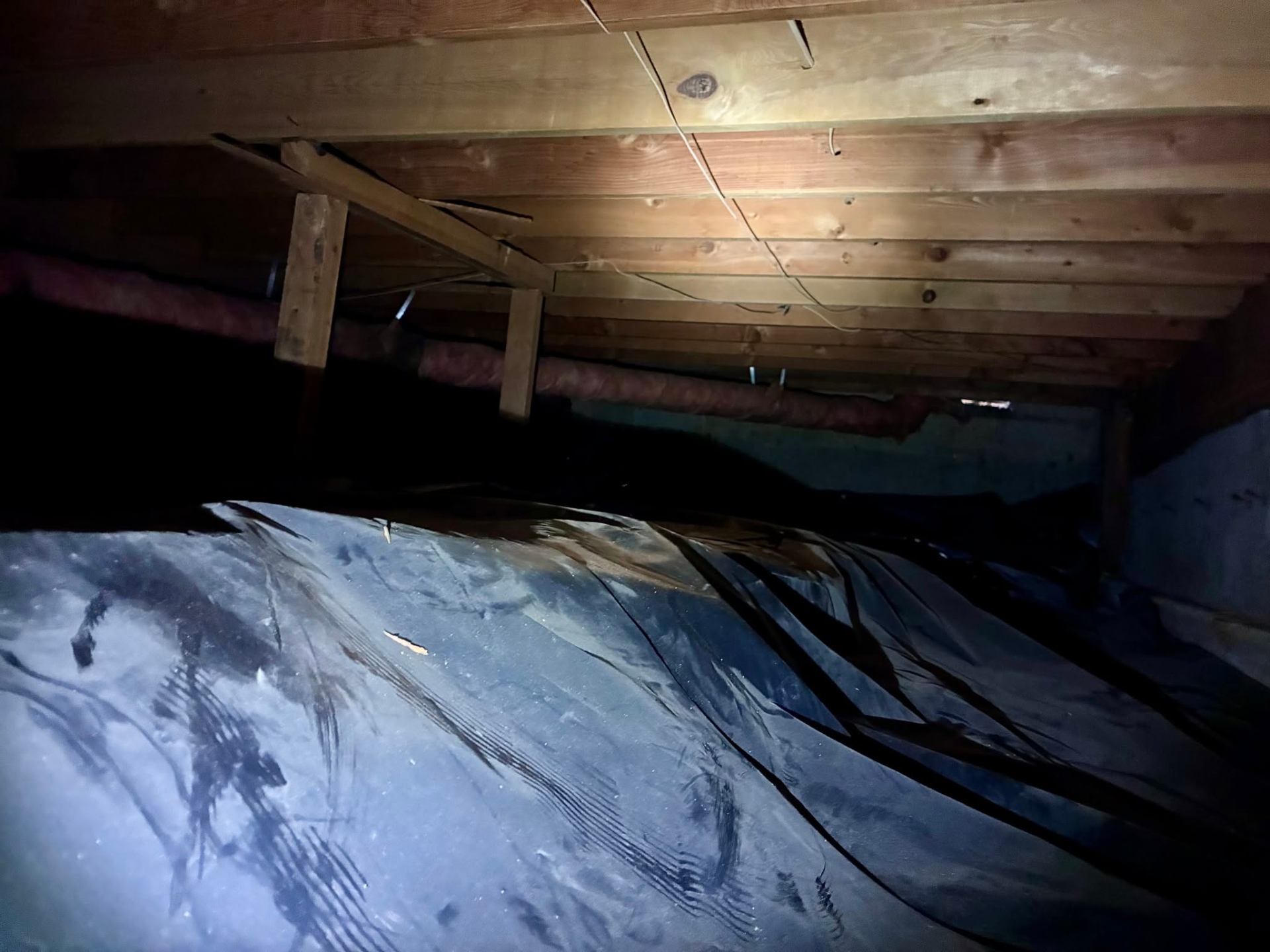
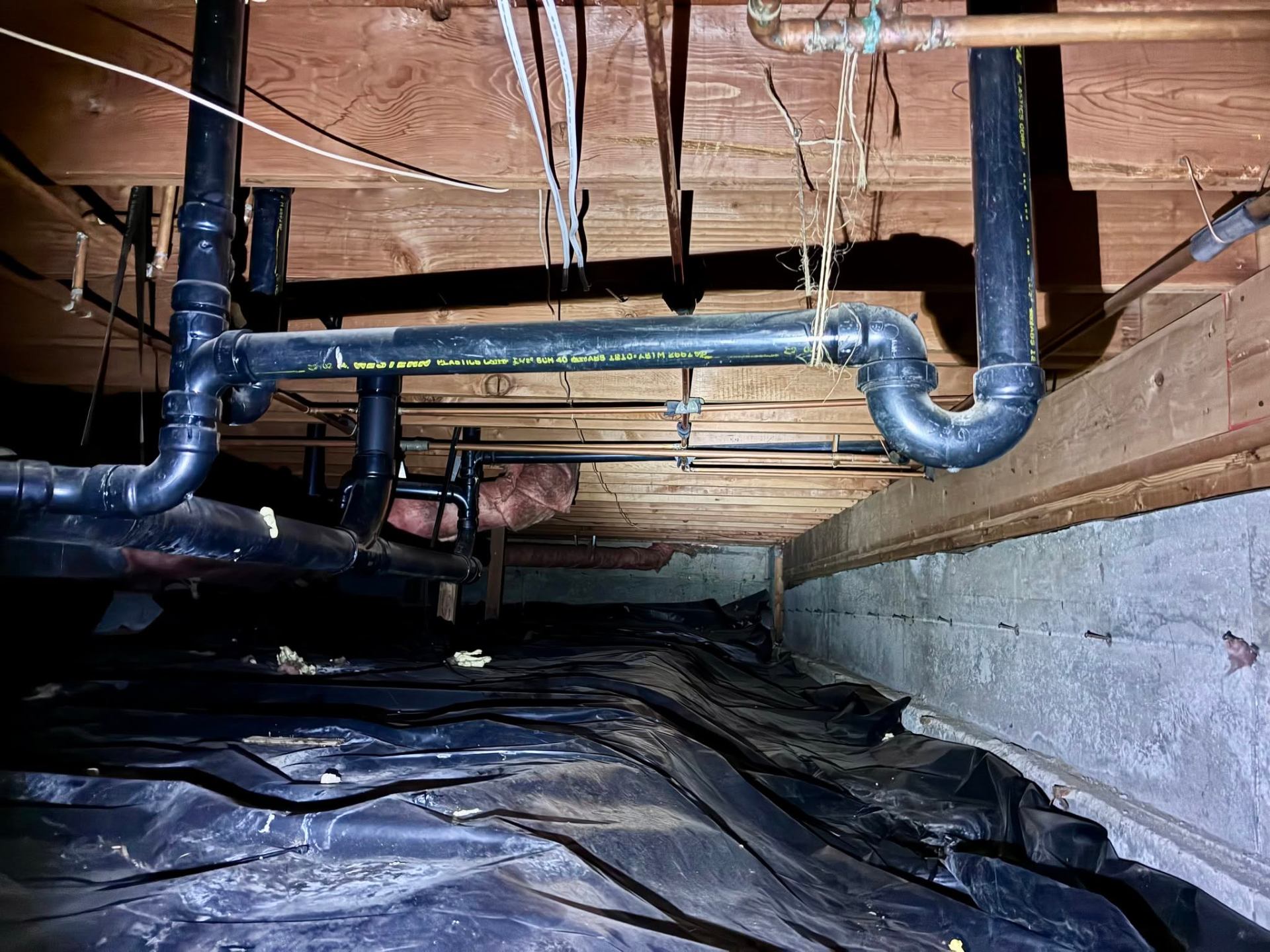
A vapor barrier is a sheet of material over the soil, but the difference between one that works and one that does not is entirely in the details. Before anything goes down, the space has to be cleared: old debris, fallen insulation, construction leftovers, and anything sharp that would puncture the sheet. Drainage and standing water get resolved first, because a barrier over an unresolved water problem hides it rather than fixing it. Rodent entry points get identified. Then the barrier is laid across the entire soil surface, with the seams lapped rather than butted, and run up the foundation wall at the perimeter and secured so it stays in position instead of migrating over the next few years. Piers get wrapped. The area around the access opening gets treated so entering the crawl space does not tear the work apart. In many projects we also address the under-floor insulation and seal the penetrations between the crawl space and the living area at the same time, because the barrier and the air sealing work together.
How it changes the rest of the house
The effects show up in places people do not expect. Less moisture moving into the floor system means under-floor insulation stays dry and keeps performing, which makes floors warmer in winter. Lower crawl space humidity reduces the conditions that support mold and wood decay in the framing, which is a structural benefit rather than a comfort one. Sealing the paths between the crawl space and the living area cuts the dust, odor, and soil gas that were being drawn upward, and it removes a significant air leakage path that was costing heat every winter. Homeowners most often report that the musty smell is gone and the floors feel different. On a building performance level, the crawl space is frequently one of the largest single improvements available in an older valley home, and it is one of the least visible.
When to look at the crawl space
If your home is over bare soil and nobody has been down there in years, it is worth an inspection regardless of whether you have noticed symptoms. If you are already planning insulation work, a remodel, new ductwork, or an under-floor project, that is the natural moment to handle the crawl space, since access is already part of the job. We inspect first, tell you what is going on down there, and address drainage and rodent access before covering the ground. Call 509-433-4065 or send your details through the contact form.
Related service: Air Sealing & Vapor Barriers
FAQ
Common questions
- Does every crawl space need a vapor barrier?
- Most vented crawl spaces over bare soil benefit from a ground barrier, because the soil releases moisture into the framing and insulation year round. We inspect first, since standing water or drainage problems have to be resolved before a barrier goes down.
- Will a vapor barrier fix a musty smell in my house?
- Often it helps significantly, because the smell is usually crawl space air being drawn up into the living space. Covering the soil and sealing the penetrations between the crawl space and the floor above is what typically removes it.
- What happens to the old under-floor insulation?
- If it is dry and intact it can stay. If it is sagging, wet, matted, or rodent-damaged, it comes out before new material goes in, and we address the entry points and moisture source at the same time.
Need garage door or insulation work done right?
Call 509-433-4065 or request an estimate online. Serving Wenatchee, East Wenatchee, Malaga, and the surrounding North Central Washington area.